
The Renewal Notice That Changes Everything
Your Tennessee auto insurance renewal notice arrives with a premium increase you did not expect. The at-fault accident happened six months ago, your current term has been fine, but now the carrier is re-rating your policy and the monthly cost is climbing. You have two or three vehicles on the policy, and the surcharge is hitting every car.
Tennessee carriers apply accident surcharges at renewal, not mid-term. That creates a specific timing window: you have until your current term expires to compare carriers and lock in a better rate structure. Once the renewal processes, you are committed to that carrier's surcharge for the full term. The decision window is shorter than most drivers realize.
Compare car insurance rates in your state
Get quotes from licensed carriers — no obligation, no spam, results in minutes.
Get Your Free QuoteTennessee Uninsured Motorist Rate
21.3%
More than one in five Tennessee drivers carries no insurance. An at-fault accident on your record makes you a higher-risk driver in a state where collision exposure is already elevated. Carriers price that risk into your premium.
Insurance Information Institute, 2023
What Tennessee Carriers Actually Do After an At-Fault Accident
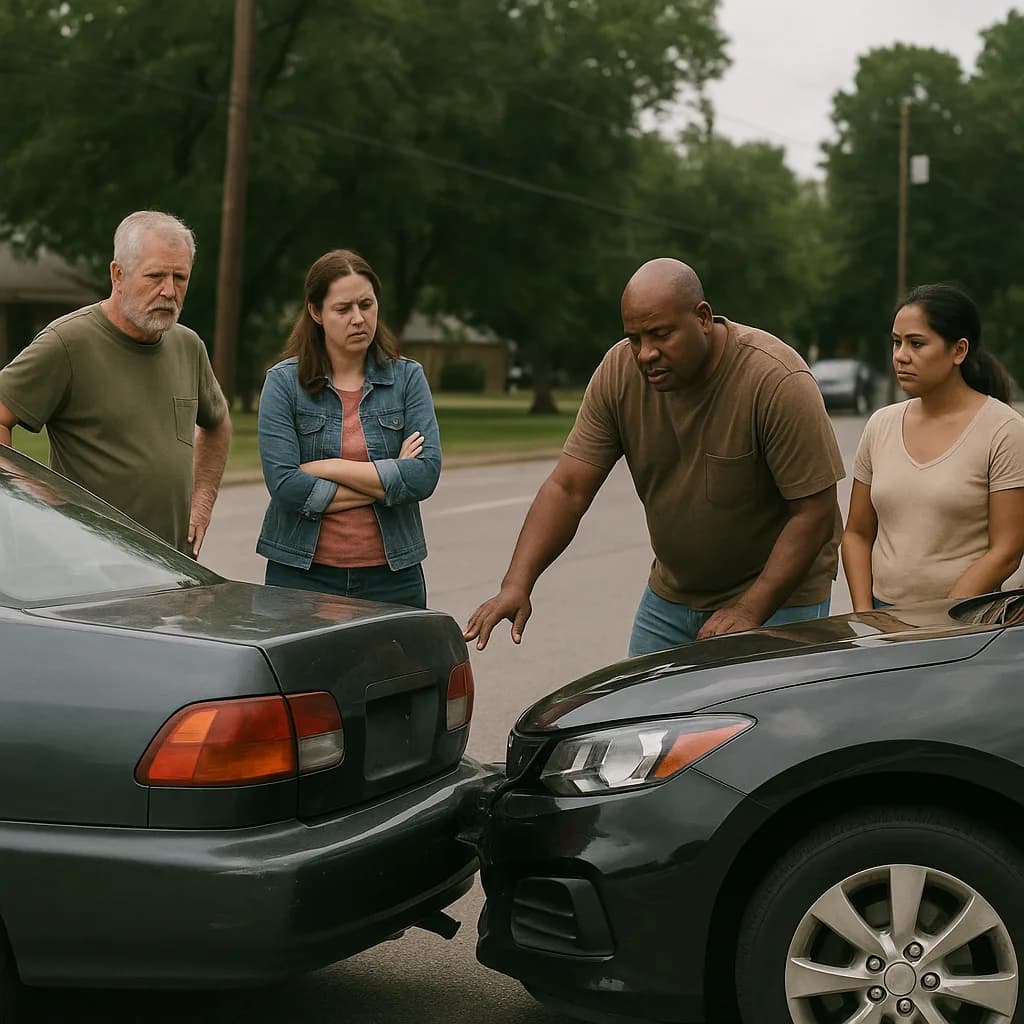
Tennessee is an at-fault state. When you cause an accident, your liability coverage pays the other party's damages, and your carrier records the claim as a chargeable event. The surcharge does not appear immediately. Your current policy term continues at the original rate. The increase hits at renewal.
The surcharge applies to the entire policy, not just the vehicle involved in the accident. If you insure three cars, all three see the rate adjustment. The carrier re-rates your household risk profile, and that profile governs every vehicle on the policy. Splitting the cars onto separate policies does not avoid the surcharge: your driving record follows you, and the accident appears on every quote you request.
Tennessee minimum liability limits are $25,000 per person, $50,000 per accident for bodily injury, and $25,000 for property damage. Carriers writing in Tennessee include State Farm, GEICO, Progressive, Allstate, Nationwide, Farmers, Liberty Mutual, and 15+ others. Not all carriers treat accident history the same way. Some apply flat surcharges; others use percentage increases. Some offer accident forgiveness programs that waive the first chargeable event; others do not.
The surcharge locks in at renewal. You cannot negotiate it mid-term, and switching carriers after renewal costs you the comparison window.
The Three-Year Surcharge Window

The three-year clock starts on the accident date. If the accident occurred on March 15, 2025, the surcharge applies to every renewal until March 15, 2028. After that date, the accident drops off your chargeable history and your rate resets to clean-driver pricing. Carriers do not prorate the surcharge as the three-year mark approaches: you pay the full increase until the exact anniversary, then it disappears at the next renewal.
Some carriers offer accident forgiveness, which waives the surcharge for your first at-fault accident if you meet eligibility requirements. Eligibility typically requires three to five years of clean driving history before the accident and continuous coverage with the same carrier. Accident forgiveness does not erase the accident from your record, but it prevents the surcharge from applying. Not all Tennessee carriers offer it, and those that do often charge a premium for the endorsement.
Related Articles





Why Multi-Car Policies Amplify the Impact
A household insuring two or three vehicles on one policy sees the surcharge multiply across every car. The carrier applies the accident-adjusted rate to the entire policy, not just the vehicle involved.
Carriers calculate multi-car discounts before applying surcharges. You still receive the multi-vehicle discount, but the base rate is higher. The math works against you: a percentage surcharge on a higher multi-car base produces a larger dollar increase than the same percentage on a single-car policy. That amplification is why comparing carriers before renewal matters more for multi-car households than for single-vehicle drivers.
Splitting the policy does not help. The accident follows the driver, not the vehicle. If you move one car to a separate policy, both policies will reflect your accident history. The only scenario where splitting makes sense is when another household member with a clean record can title and insure a vehicle independently, but that requires the second driver to be the primary operator and the vehicle to be titled in their name.
Tennessee High-Risk Driver Rate Range
$198-$294/mo
Ironwood rate benchmark data
The Comparison Window Before Renewal
You have until your current term expires to request quotes from other carriers. Tennessee carriers writing multi-car policies include Progressive, GEICO, State Farm, Allstate, Nationwide, Farmers, and others. Each carrier prices accident risk differently. Some apply flat surcharges; others use percentage increases tied to claim severity. A carrier that quotes high for clean drivers may quote competitively for drivers with one accident.
Request quotes 30 to 45 days before your renewal date. That gives you time to compare rates, verify coverage matches your current policy, and bind a new policy before the renewal processes. If you wait until the renewal date, your current carrier locks in the surcharge and you lose the comparison advantage. Switching mid-term after renewal typically triggers a cancellation fee and forfeits any unearned premium discount your current carrier applied.
What to Do Right Now
Check your renewal date. If it is within 60 days, start requesting quotes immediately. Provide accurate accident details: date, claim amount, and whether the other party filed a claim. Inaccurate information delays quotes and can void coverage later. Compare coverage limits, deductibles, and total premium across at least three carriers. The lowest monthly rate is not always the best value if coverage limits drop or deductibles double.
If your renewal is farther out, mark your calendar for 45 days before the date and set a reminder. Use the time between now and then to verify your current coverage limits, confirm your household's vehicle count and drivers, and gather VINs for every car on the policy. When you request quotes, you will need that information immediately. Waiting until the last week before renewal compresses your decision window and limits your options.