
The Surcharge Hits Every Vehicle on Your Policy
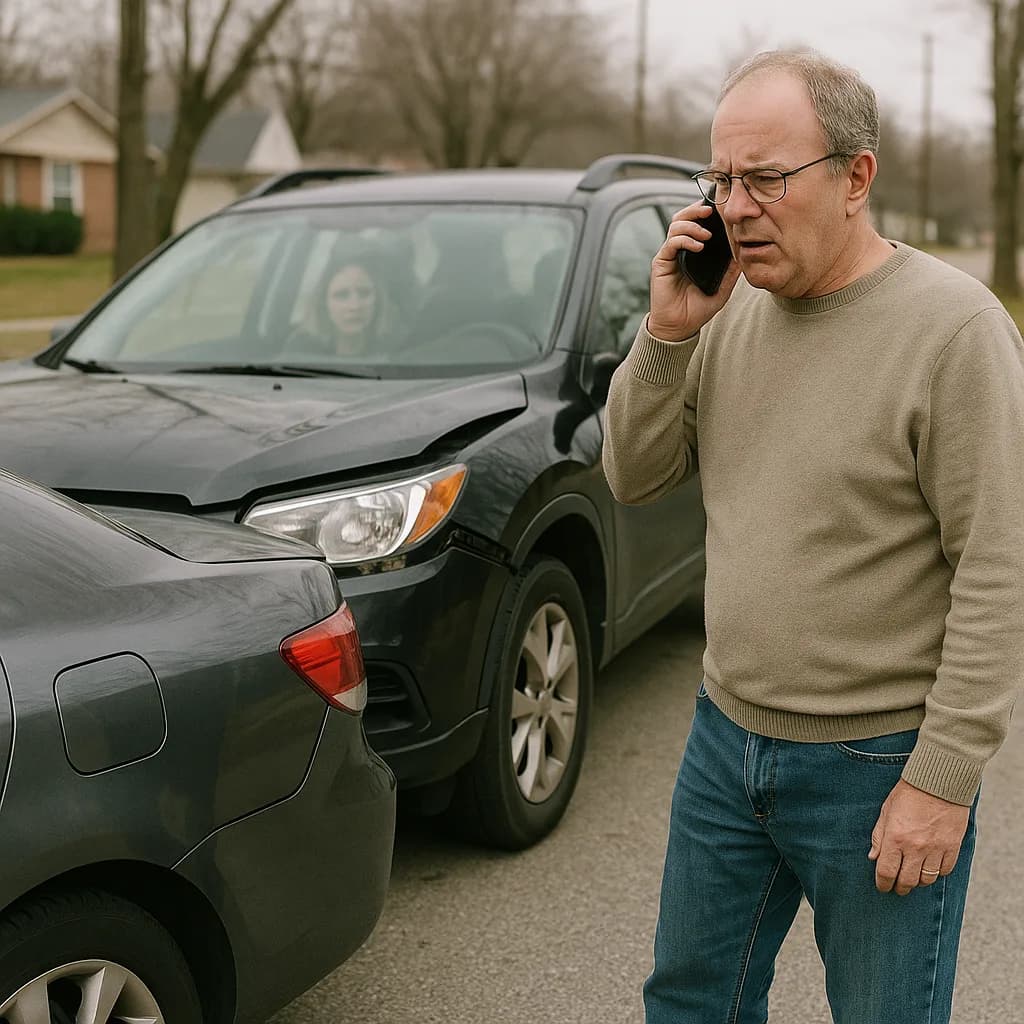
You caused an accident in Montana. Your carrier sent a renewal notice showing a premium increase that applies to every car on your policy, not just the one involved in the collision. The surcharge isn't proportional to the damage amount, and it doesn't disappear at your next renewal. You're trying to figure out how long this lasts and whether switching carriers resets the clock.
Montana carriers treat an at-fault accident as a policy-level event. When one driver on a multi-car policy causes a claim, the carrier re-rates the entire policy at the next renewal. The surcharge period runs three years from the accident date, not from the date you filed the claim or the date your policy renewed. That three-year window follows you to any new carrier because Montana requires insurers to pull your motor vehicle record during underwriting.
Compare car insurance rates in your state
Get quotes from licensed carriers — no obligation, no spam, results in minutes.
Get Your Free QuoteMontana Accident Surcharge Period
3 years
The surcharge window starts at the accident date and runs through three full policy terms. Switching carriers does not reset the clock because your motor vehicle record carries the accident date, and every Montana-licensed carrier pulls that record during underwriting.
Montana Department of Justice, Motor Vehicle Division
What the Carrier Actually Sees
Montana carriers pull your motor vehicle record when you apply for coverage and again at each renewal. The record shows every accident reported to law enforcement or filed as a claim, along with the exact date it occurred. The carrier assigns a surcharge based on fault determination, which comes from the police report or the claims adjuster's liability decision.
An at-fault accident stays on your Montana driving record for three years from the date of the collision. The surcharge applies at your next renewal after the accident and continues for the full three-year period. If you switch carriers during that window, the new carrier sees the same accident on your record and applies its own surcharge. There is no grace period and no way to remove an at-fault accident from your record early unless the fault determination was incorrect and you successfully dispute it with the reporting agency.
Multi-car policies amplify the impact because the carrier re-rates every vehicle when it applies the surcharge. A household with three cars sees the premium increase spread across all three, even if only one driver caused the accident. The total dollar increase depends on each carrier's surcharge formula, which varies by company and is not published in a standard format.
The carrier re-rates your entire multi-car policy at renewal, not just the vehicle involved in the accident. The surcharge applies to every car you insure under that policy number.
How Carriers Apply the Surcharge

Most carriers apply the surcharge as a percentage increase to your base premium. The percentage varies by carrier and by the severity of the accident, measured in claim payout rather than damage amount. The surcharge percentage is not disclosed in your policy documents; it appears as a line item on your renewal notice or is folded into your new premium without separate identification.
The surcharge applies at your first renewal after the accident date. If your policy renews every six months, you see the increase at the renewal following the accident. The surcharge stays in place for six full renewal cycles if you're on a six-month term, or three full cycles if you're on an annual term. Switching carriers mid-term does not avoid the surcharge because the new carrier pulls your motor vehicle record during underwriting and applies its own formula to the same accident.
Related Articles





Which Carriers Write Multi-Car Policies After an Accident
Fifteen carriers write multi-car policies in Montana and accept drivers with a recent at-fault accident on their record. Standard-tier carriers like State Farm, Geico, Progressive, Farmers, Allstate, and USAA will renew your policy after an accident but apply a surcharge. Non-standard carriers like Bristol West, The General, and National General specialize in higher-risk drivers and may offer lower base premiums with smaller surcharges, though their coverage options are often more limited.
Comparing quotes during the surcharge window requires you to disclose the accident to every carrier. Montana law does not allow carriers to deny coverage based solely on a single at-fault accident, but carriers can decline to write a multi-car policy if the household has multiple accidents or violations across drivers. When you request quotes, provide the exact accident date and the claim payout amount if known. Carriers use both to calculate the surcharge, and withholding either can result in a rescinded quote or a policy cancellation after the carrier pulls your record.
Some carriers offer accident forgiveness programs that waive the surcharge for your first at-fault accident if you meet eligibility requirements. State Farm and Allstate both offer forgiveness programs in Montana, but eligibility typically requires three to five years of prior claim-free history with the same carrier. If you were already insured with one of these carriers before the accident and meet the tenure requirement, the forgiveness applies automatically at renewal. If you're shopping for a new carrier after the accident, you cannot retroactively qualify for forgiveness.
Montana Multi-Car Policy Writers
15 carriers
Fifteen carriers write multi-car policies in Montana and accept drivers with a recent at-fault accident. Standard-tier carriers apply surcharges at renewal; non-standard carriers may offer lower base premiums with smaller surcharges but more limited coverage options.
Montana Department of Insurance carrier roster
The Three-Year Path Forward
The surcharge drops off automatically three years from the accident date. You do not need to request removal or file any paperwork. At the first renewal after the three-year mark, your carrier re-rates your policy without the accident on your record, and your premium decreases to reflect the clean record. If you switch carriers during the three-year window, the new carrier applies its own surcharge until the three-year mark, at which point it also drops off.
Montana's three-year window is shorter than some neighboring states but longer than others. The clock starts at the accident date, not the claim-filing date or the renewal date, so track the exact date of the collision to know when the surcharge expires. If you cause a second accident during the three-year window, the carrier treats it as a separate event with its own three-year surcharge period, and both surcharges can apply simultaneously until the first one expires.
Compare Carriers That Write Your Household
Request quotes from at least three carriers that write multi-car policies in Montana and accept drivers with a recent at-fault accident. Provide the exact accident date, the claim payout amount if known, and the number of vehicles you're insuring. Carriers calculate surcharges differently, and the lowest base premium does not always produce the lowest total cost after the surcharge is applied. Compare the final quoted premium for all vehicles combined, not just the per-vehicle rate, because the surcharge affects the entire policy.