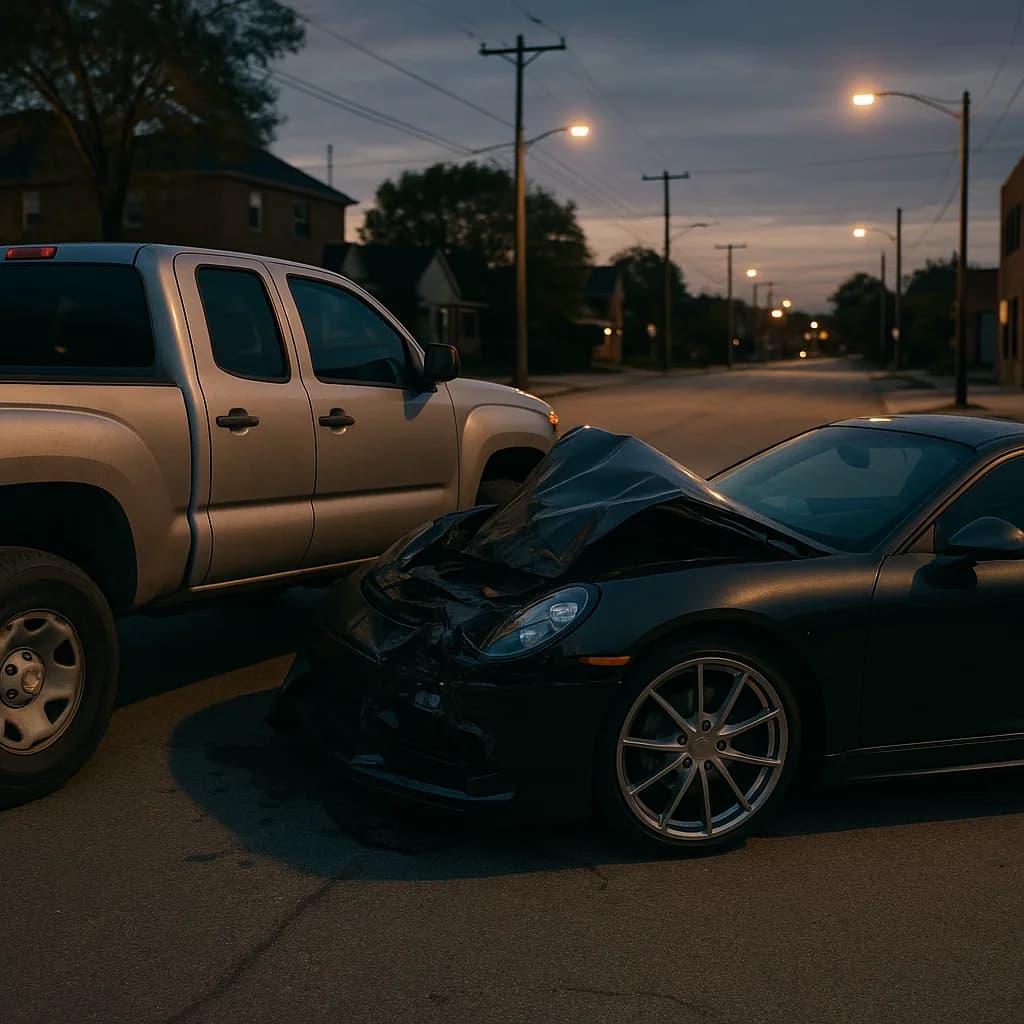
The Multi-Car Surcharge Reality After an At-Fault Accident
You had an at-fault accident in one of your household's vehicles, and your carrier just sent a renewal notice showing a premium increase on the entire policy. The accident involved only one car, but the surcharge applies to all three vehicles you insure. This is not a billing error. South Dakota operates under a traditional fault system, and when you carry multiple vehicles on one policy, the at-fault accident surcharge applies to the policy as a whole, not to the individual vehicle that was in the crash.
The confusion stems from how multi-car policies are rated. Carriers price a multi-vehicle policy by evaluating the combined risk of every driver and every vehicle on the policy, then applying the multi-car discount to the total premium. When an at-fault accident appears on your record, the carrier re-rates the entire policy to reflect the increased risk, and that re-rating touches every vehicle. The accident stays on your South Dakota driving record for three years from the date of the incident, but the surcharge window and the amount vary by carrier.
Compare car insurance rates in your state
Get quotes from licensed carriers — no obligation, no spam, results in minutes.
Get Your Free QuoteSD Average Auto Premium
$78/mo
South Dakota drivers pay an average of $78 per month for auto insurance, among the lowest in the nation.
NAIC Auto Insurance Database Report 2023
How South Dakota's Fault System Assigns Financial Responsibility
South Dakota uses a traditional fault-based system. The driver determined to be at fault for the accident is financially responsible for the other party's damages. Your liability coverage pays for the other driver's property damage and injuries up to your policy limits, which must meet the state minimums of $25,000 per person for bodily injury, $50,000 per accident for bodily injury, and $25,000 for property damage. When you file a claim under your liability coverage or the other party files a claim against you, the accident is recorded as at-fault on your driving record.
The at-fault designation triggers two consequences. First, your carrier will apply a surcharge at your next renewal. Second, the accident remains on your South Dakota driving record for three years, visible to any carrier that pulls your record during that period. The three-year window starts from the accident date, not from the date you filed the claim or received the surcharge notice. If you switch carriers during those three years, the new carrier will see the accident and price accordingly.
The at-fault accident surcharge applies to the entire multi-car policy, not just the vehicle involved in the crash, because carriers rate the household's combined risk.
Why the Surcharge Hits Every Vehicle on Your Policy

When you add a second or third vehicle to your policy, the carrier calculates a base premium for each vehicle individually, then applies the multi-car discount to the combined total. That discount typically ranges from 10 to 25 percent depending on the carrier, though the exact figure is not disclosed in rate filings. The discount reflects the carrier's expectation that insuring multiple vehicles under one policy reduces administrative cost and increases customer retention. But the discount does not isolate risk by vehicle. The policy is priced as a single unit.
An at-fault accident increases the likelihood of future claims, and that increased risk applies to the policyholder, not to the specific car. Carriers assume that a driver who caused one accident is statistically more likely to cause another, regardless of which vehicle they are driving at the time. When the carrier re-rates your policy at renewal, the surcharge is applied to the base premium before the multi-car discount is calculated, so the increase affects the total cost of insuring all your vehicles. The only way to avoid the surcharge on the other vehicles is to move them to a separate policy under a different household member's name, but that eliminates the multi-car discount and often costs more than absorbing the surcharge.
Related Articles
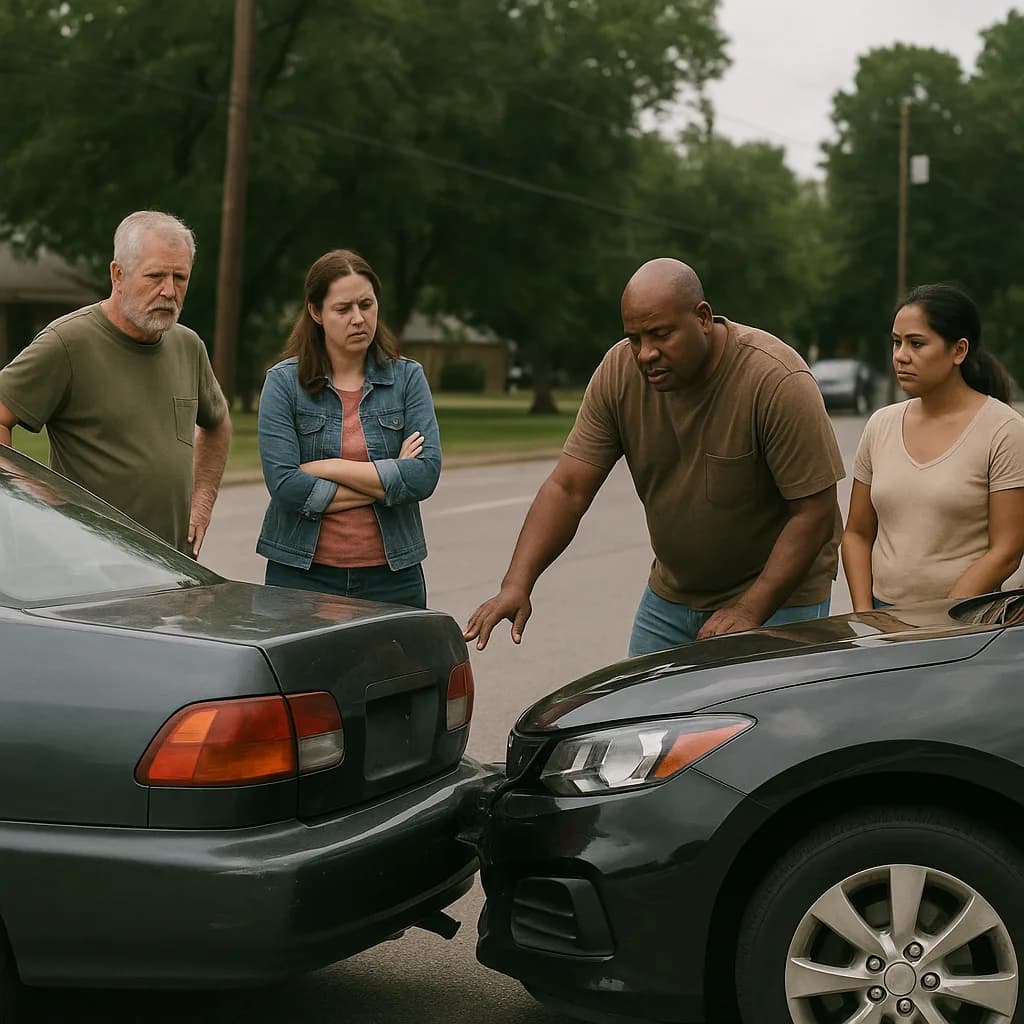





How Long the Surcharge Lasts and When It Drops Off
The accident stays on your South Dakota driving record for three years from the date of the incident. During that period, any carrier that pulls your record will see the at-fault accident and factor it into their pricing. However, the surcharge applied by your current carrier does not necessarily last the full three years. Some carriers apply the surcharge for three years, matching the record period. Others drop the surcharge after two years if you have no additional claims or violations. A few carriers apply the surcharge for only one year, though this is less common for at-fault accidents than for minor violations.
The surcharge amount also varies by carrier. The variation reflects each carrier's claims experience and risk models. Carriers that specialize in standard or preferred-risk drivers tend to apply higher surcharges because an at-fault accident represents a significant deviation from their expected risk profile. Carriers that write non-standard or high-risk policies often apply smaller surcharges because their baseline pricing already accounts for elevated risk.
If you stay with your current carrier, the surcharge will drop off at the end of the carrier's surcharge window, which is stated in your policy documents or available by calling your agent. If you switch carriers before the three-year record period ends, the new carrier will see the accident and apply their own surcharge, which may be higher or lower than what you were paying. Shopping carriers at renewal is the most reliable way to reduce the total cost of the surcharge, especially if you are currently with a carrier that applies a long surcharge window or a high percentage increase.
SD Uninsured Motorist Rate
9.4%
Nearly one in ten South Dakota drivers is uninsured. If an uninsured driver causes an accident, your uninsured motorist coverage pays for your damages, and the claim does not count as at-fault on your record. Carrying uninsured motorist coverage protects you from rate increases caused by someone else's lack of insurance.
Insurance Information Institute, 2023
Accident Forgiveness and Multi-Car Policy Eligibility
Accident forgiveness is a program offered by some carriers that waives the surcharge for your first at-fault accident if you meet eligibility requirements. The requirements vary by carrier but typically include a clean driving record for three to five years before the accident and continuous coverage with the same carrier for a minimum period, often three years. Not all carriers operating in South Dakota offer accident forgiveness, and those that do may restrict eligibility to drivers on preferred-tier policies.
If you carry a multi-car policy, accident forgiveness applies to the policy, not to individual vehicles. One at-fault accident is forgiven per policy period, regardless of how many vehicles or drivers are on the policy. If a second driver on your policy has an at-fault accident during the same period, the carrier will apply a surcharge for that second accident even if the first was forgiven. Some carriers charge an additional premium for accident forgiveness coverage, while others include it automatically for long-term customers who meet the eligibility criteria. Check your policy documents or contact your agent to confirm whether you have accident forgiveness and whether it applies to your current situation.
Shopping Carriers After an At-Fault Accident
Switching carriers after an at-fault accident can reduce your total premium if you find a carrier with a lower surcharge percentage or a shorter surcharge window. South Dakota has 19 major carriers writing auto insurance in the state, and each prices at-fault accidents differently. Carriers such as Geico, Progressive, and State Farm write policies for drivers with accident history and apply surcharges that vary by the driver's overall risk profile. Non-standard carriers such as Bristol West, Dairyland, and The General specialize in higher-risk drivers and often apply smaller surcharges because their baseline rates already account for elevated risk.
When you request quotes, provide accurate information about the accident, including the date, the type of claim filed, and the total payout. Carriers verify this information by pulling your driving record and your claims history from the Comprehensive Loss Underwriting Exchange (CLUE) database. Misrepresenting the accident or omitting it from your application can result in the carrier rescinding coverage or denying a future claim. Compare quotes from at least three carriers, and request quotes for the same coverage limits and deductibles you currently carry so the comparison reflects only the difference in how each carrier prices the accident. If you insure multiple vehicles, confirm that each quote includes the multi-car discount and that the discount applies to all vehicles on the policy.
Next Steps for Multi-Car Households After an At-Fault Accident
Request quotes from carriers that write multi-car policies for drivers with accident history. Provide the accident details accurately and compare the total annual premium for all vehicles on your policy, not just the monthly cost for one car. Verify that each quote includes the multi-car discount and that the surcharge window and percentage are disclosed in the quote summary. If your current carrier offers accident forgiveness and you meet the eligibility requirements, confirm whether the forgiveness applies before switching. If you do not qualify for forgiveness, switching to a carrier with a lower surcharge or a shorter surcharge window will reduce the total cost of insuring your household's vehicles over the next three years.