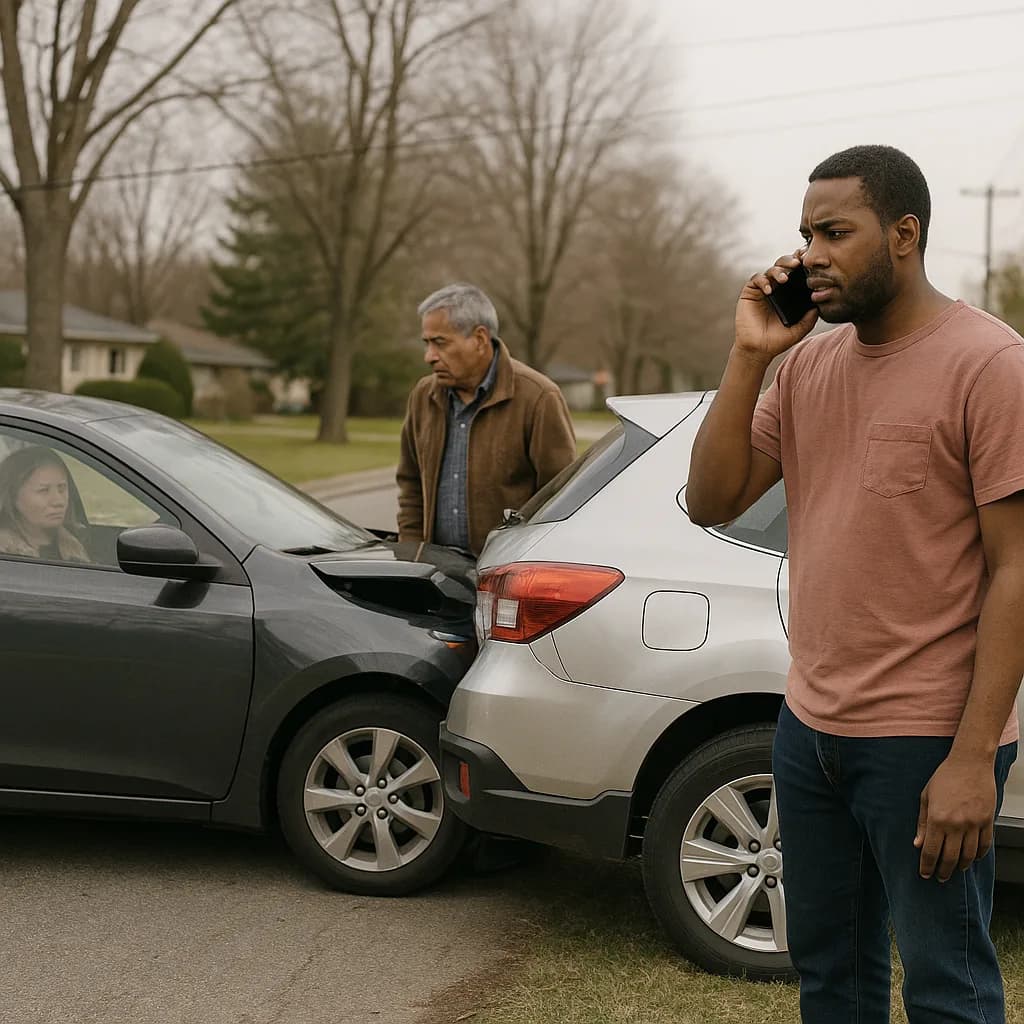
What Happens the Day After an At-Fault Accident
You caused an accident yesterday. Your carrier has the police report. Your renewal is in four months, and you own two cars on one policy. The question you're asking right now: does the surcharge hit both vehicles, and does it hit at renewal or immediately?
Arkansas law does not require carriers to notify you before applying a surcharge, and most carriers apply the increase at your next renewal date rather than mid-term. The surcharge applies to the entire policy—not per vehicle—so both cars on your policy will see the same percentage increase applied to their combined premium. The timeline starts at the accident date, not the renewal date, which means switching carriers before renewal does not reset the clock.
Compare car insurance rates in your state
Get quotes from licensed carriers — no obligation, no spam, results in minutes.
Get Your Free QuoteArkansas Average Auto Premium
$88/mo
Arkansas drivers paid an average of $88 per month for auto insurance in 2023, among the lowest in the nation.
NAIC Auto Insurance Database Report 2023
How Arkansas Carriers Apply the Surcharge
The surcharge is a percentage increase applied to your base premium at renewal. It does not appear as a separate line item. Your carrier recalculates your rate using your new risk profile, which now includes one at-fault accident. The increase applies to every vehicle on the policy because the policy is the rated unit, not the individual car.
Arkansas carriers use a 3-year lookback window measured from the accident date. If your accident occurred on March 15, 2025, it remains chargeable until March 15, 2028, regardless of how many times you renew or switch carriers during that period. Switching to a new carrier does not erase the accident—it simply moves you to a different carrier's surcharge schedule.
Most carriers in Arkansas write multi-vehicle policies with a combined base rate, then apply discounts and surcharges at the policy level. When you add a second or third vehicle, the multi-car discount reduces the total premium. The at-fault accident surcharge increases it. Both adjustments apply to the same combined base, which means the surcharge affects every vehicle you insure, even the one you were not driving during the accident.
Switching carriers before your renewal does not avoid the surcharge—it resets your entire policy to a new carrier's base rate, which may be higher than your current rate even before the accident surcharge is applied.
The Mid-Cycle Switching Trap
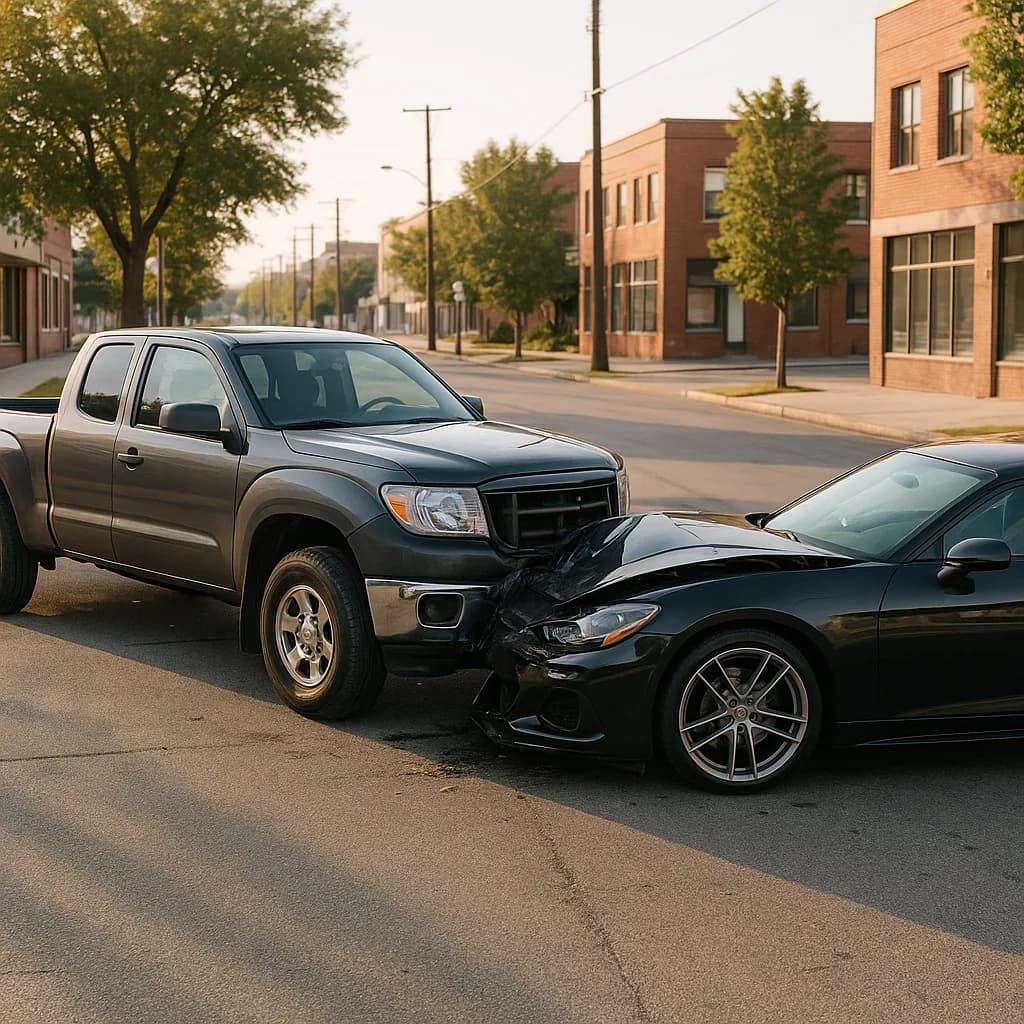
Your current carrier already has your base rate locked in for the remainder of your term. When they apply the surcharge at renewal, they're increasing a rate you've already negotiated. A new carrier starts from scratch: they pull your motor vehicle report, see the accident, and quote you their standard rate for a driver with one at-fault accident. That standard rate is often higher than your current carrier's surcharged rate, because you lose any loyalty discounts, tenure-based rate reductions, or bundling benefits you had with your original carrier.
The better strategy for most Arkansas drivers with multi-vehicle policies: stay with your current carrier through the first renewal after the accident, then shop aggressively six months before the second renewal. By that point, you'll have 18 months of clean driving post-accident, which some carriers reward with accident-step-down programs that reduce the surcharge incrementally. Switching too early forfeits that potential reduction and locks you into a higher base rate for the remainder of the 3-year window.
Related Articles






Which Arkansas Carriers Write Accident History Best
Not all carriers treat at-fault accidents the same way. Some apply flat percentage surcharges regardless of severity; others tier their surcharges based on claim payout. A few carriers in Arkansas offer accident forgiveness after a certain number of claim-free years, which waives the first at-fault accident surcharge entirely—but only if you qualified before the accident occurred.
State Farm, Allstate, and Farmers all write multi-vehicle policies in Arkansas and all apply 3-year surcharges for at-fault accidents. Progressive and Geico write accident history but use different base-rate structures, which means their surcharged rates can land higher or lower than standard carriers depending on your specific profile. Non-standard carriers like Bristol West, Dairyland, and The General specialize in high-risk drivers and often quote lower than standard carriers for drivers with one accident, but their multi-car discounts are smaller.
The key variable for multi-vehicle households: how the carrier structures the multi-car discount relative to the accident surcharge. A carrier that applies the surcharge first, then the multi-car discount, will produce a lower total premium than a carrier that applies the discount first and then surcharges the discounted amount. Most Arkansas carriers apply surcharges to the base rate before discounts, but not all—ask explicitly when comparing quotes.
Arkansas Minimum Liability Limits
$25,000 / $50,000 / $25,000
Arkansas requires $25,000 bodily injury per person, $50,000 per accident, and $25,000 property damage. Drivers with at-fault accidents often raise limits to 100/300/100 to reduce future liability exposure, but higher limits also mean higher base premiums before the surcharge is applied.
Arkansas Department of Finance and Administration
How Long the Surcharge Lasts and When It Drops
The 3-year window is absolute. Arkansas carriers cannot legally surcharge an accident beyond three years from the date of the incident. On the day the accident ages out, your rate recalculates at your next renewal without the surcharge. Some carriers apply the reduction automatically; others require you to request a re-quote.
A few carriers offer accident step-down programs that reduce the surcharge incrementally: full surcharge for the first 12 months, two-thirds for the next 12, one-third for the final 12. This is not standard across the Arkansas market, and it only applies if you stay with the same carrier for the full 3-year period. Switching carriers resets you to the new carrier's full surcharge schedule, forfeiting any step-down benefit you had accrued.
Compare Carriers Before Your Renewal Date
The best time to shop is 45–60 days before your renewal. By that point, your current carrier has already calculated your new rate and sent your renewal notice. You know exactly what staying costs. You can compare that surcharged rate against quotes from carriers that specialize in accident history without the pressure of a mid-term cancellation penalty.
Request quotes from at least three carriers that write multi-vehicle policies in Arkansas and explicitly handle drivers with at-fault accidents. State Farm, Progressive, Geico, Allstate, and Farmers all write this profile. Non-standard carriers like Bristol West and Dairyland often quote lower for the first year post-accident but may not offer the same multi-car discount depth as standard carriers. Compare the total annual premium for all vehicles on your policy, not just the per-vehicle rate, because the multi-car discount structure varies widely and affects your total cost more than the base rate alone.