
The Premium Jump After an At-Fault Accident
You were in an at-fault accident in Arizona. Your carrier paid the claim, and now your renewal notice shows a premium increase you did not expect. The surcharge is real, it is substantial, and it will stay on your policy for a defined period — but the timeline is not what most drivers assume.
Arizona carriers treat at-fault accidents as chargeable events that trigger a surcharge at your next renewal. The surcharge period runs for three years from the accident date, not from the date you received the renewal notice. That distinction matters when you are deciding whether to stay with your current carrier or shop for a better rate.
Compare car insurance rates in your state
Get quotes from licensed carriers — no obligation, no spam, results in minutes.
Get Your Free QuoteArizona Uninsured Motorist Rate
10.6%
One in ten Arizona drivers carries no insurance, which increases the likelihood of at-fault claims when you are involved in an accident with an uninsured driver. Uninsured motorist coverage protects you when the other driver cannot pay.
Insurance Information Institute, 2023
How Arizona Carriers Apply the Surcharge
The surcharge applies at your next policy renewal after the accident. Arizona carriers do not mid-term cancel for a single at-fault accident, but they will re-rate your policy when the term ends. The new rate reflects the accident surcharge, and that surcharge remains in effect for three years from the accident date.
The three-year window is a hard rule across most carriers writing in Arizona. If your accident occurred on March 15, 2023, the surcharge drops on March 15, 2026, regardless of when your policy renews. Carriers calculate the surcharge as a percentage increase applied to your base premium, not a flat dollar amount. A driver with a higher base premium pays a higher surcharge in absolute dollars.
Arizona does not mandate accident forgiveness, and most carriers do not offer it on standard policies. A handful of carriers — State Farm, Allstate, and Liberty Mutual among them — offer accident forgiveness as an optional endorsement or as a loyalty benefit after a set number of claim-free years. If you do not have accident forgiveness in place before the accident, you cannot add it retroactively.
The surcharge clock starts on the accident date, not the renewal date. A mid-term accident means your next renewal carries the surcharge even if the accident was recent.
What Counts as an At-Fault Accident in Arizona

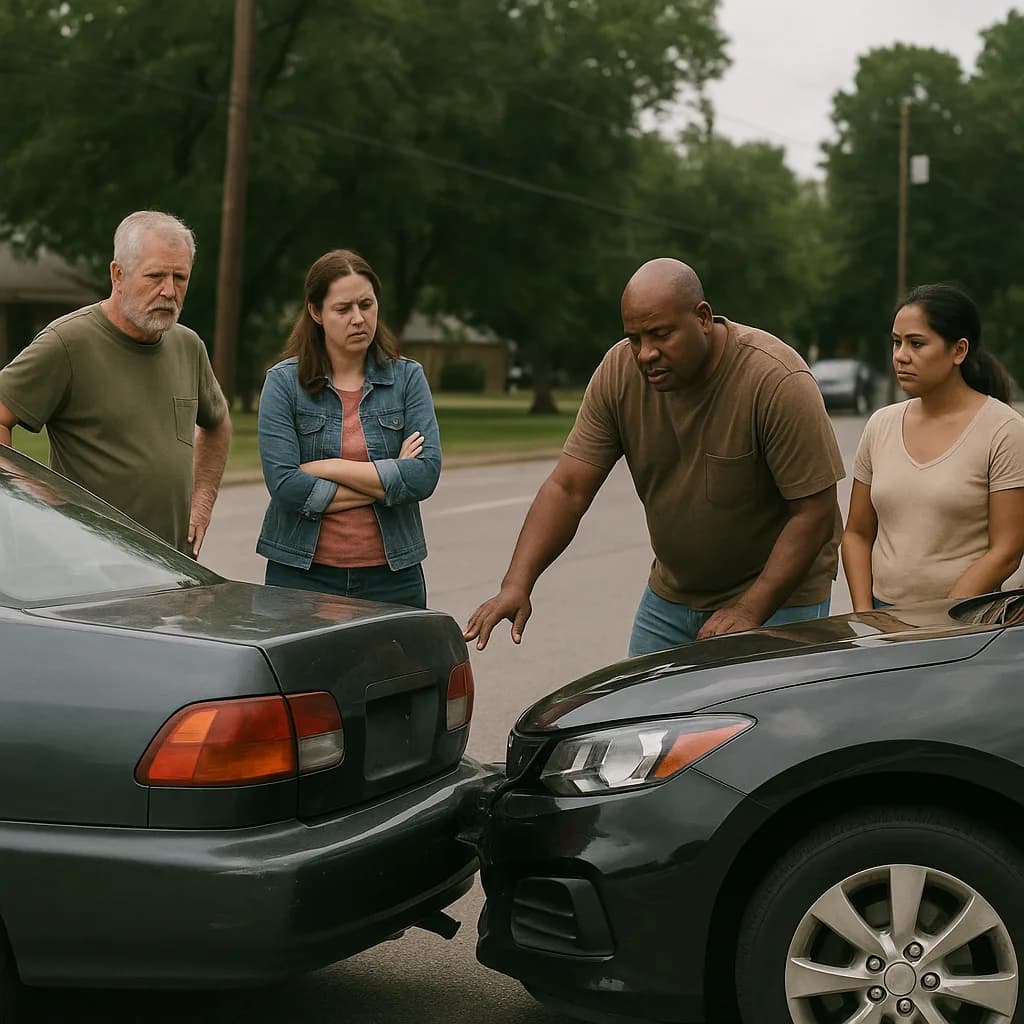
An at-fault accident is any collision where your carrier pays a liability claim to another party or pays a collision claim on your own vehicle after determining you caused the accident. Single-vehicle accidents — hitting a fixed object, rolling your car, or running off the road — are always chargeable. Multi-vehicle accidents are chargeable when the carrier determines you were primarily at fault based on the accident investigation, witness statements, and police report.
Arizona is a fault state, which means the at-fault driver's liability coverage pays for the other party's damages. If your carrier pays a liability claim, the accident is chargeable. If the other driver's carrier pays and your carrier pays nothing, the accident is not chargeable to you. Comprehensive claims — theft, vandalism, weather damage, animal strikes — are not chargeable as at-fault accidents, though some carriers apply a separate claims-frequency surcharge if you file multiple comprehensive claims in a short period.
Related Articles





How Long the Surcharge Lasts and When It Drops
The surcharge remains on your policy for three years from the accident date. That period is fixed by carrier underwriting rules, not by Arizona statute. After three years, the accident is no longer chargeable, and your rate drops back to the base premium for your current risk profile at that time.
The drop is not automatic at every carrier. Some carriers remove the surcharge at the first renewal after the three-year anniversary; others require you to request a re-rate or shop for a new quote. If your three-year anniversary falls mid-term, the surcharge typically remains until your next renewal date, then drops. Carriers do not prorate the surcharge removal mid-term.
Arizona does not require carriers to remove the accident from your record after three years — the accident remains visible in your claims history indefinitely. The three-year rule applies only to the surcharge. After three years, the accident is still part of your underwriting profile, but it no longer triggers a rate increase. A driver with multiple accidents in their history may still be declined by preferred carriers even after the surcharges drop.
Arizona Average Annual Premium
$1,343.85
Arizona drivers pay an average of $1,343.85 per year for auto insurance, which translates to roughly $112 per month before any surcharges.
NAIC Auto Insurance Database Report, 2023
Which Arizona Carriers Write Post-Accident Policies
Not every carrier will renew your policy after an at-fault accident, and not every carrier that renews offers competitive rates. Preferred carriers — USAA, Amica, Auto-Owners — typically non-renew drivers after a single at-fault accident or move them to a higher-tier subsidiary. Standard carriers — State Farm, Allstate, Geico, Progressive — generally renew after one accident but apply the full surcharge. Non-standard carriers — Bristol West, Dairyland, Acceptance, The General — specialize in post-accident drivers and often offer lower rates than standard carriers for drivers with one or two accidents.
Arizona has 29 carriers actively writing auto insurance for drivers with accident history. Geico, Progressive, State Farm, and Allstate write the largest volume and will renew most single-accident drivers. Mercury General, National General, and Farmers also write post-accident policies in Arizona. Non-standard carriers like Bristol West and Dairyland write policies specifically for drivers with accidents, violations, or lapses and often beat standard-carrier post-accident rates by 15 to 30 percent.
Compare Carriers Before Your Renewal
Your current carrier's post-accident rate is not the only rate available to you. Arizona carriers price accident risk differently, and the carrier that offered the best rate before your accident may not offer the best rate after. Shopping three to five quotes before your renewal gives you a clear picture of your options.
Request quotes 30 to 45 days before your renewal date. That window gives you time to compare rates, review coverage options, and switch carriers if a better rate is available. Arizona does not penalize you for switching carriers, and switching does not reset the three-year surcharge clock — the accident date remains the same regardless of which carrier you choose. When you request quotes, provide the accident date and a brief description of the claim. Carriers will pull your claims history during underwriting, and any discrepancy between what you report and what appears in the database will delay or void the quote.