One Accident Affects Every Vehicle on the Policy
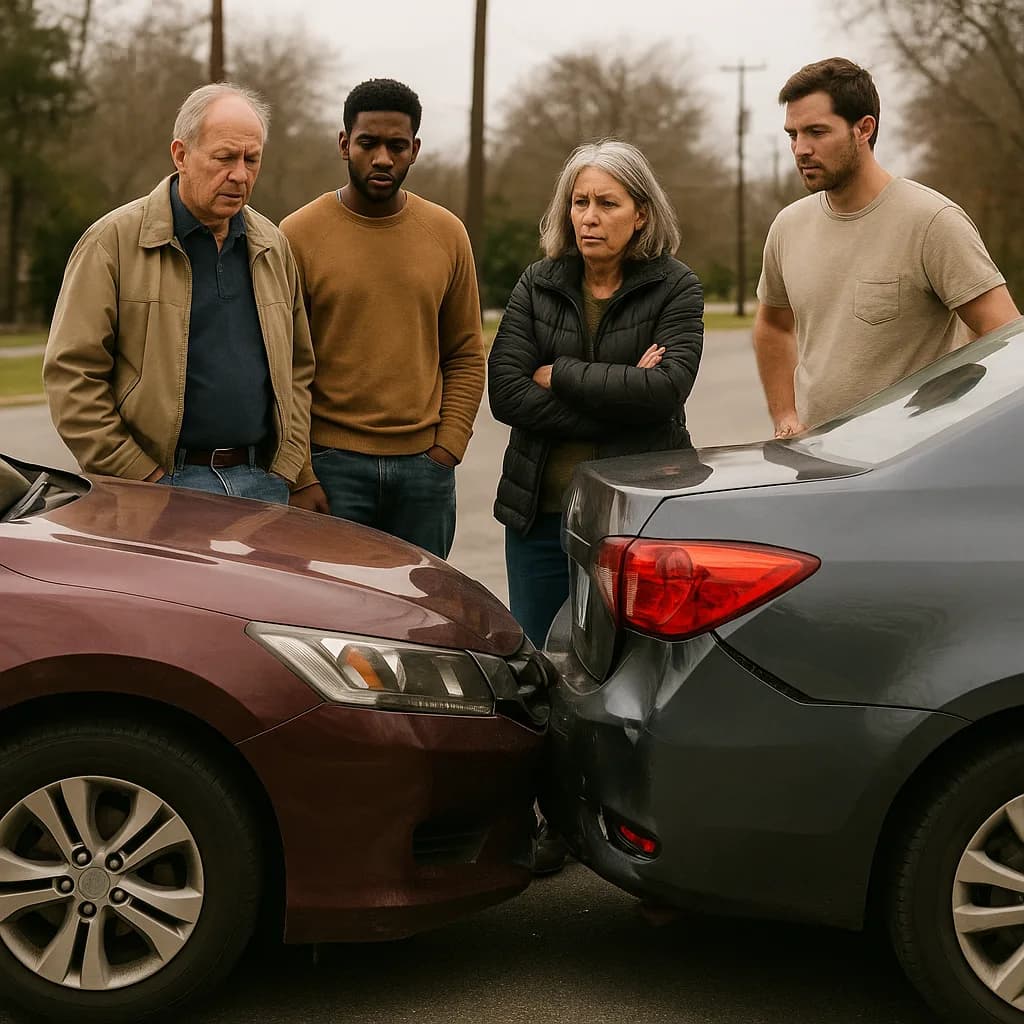
You had an accident in one of your household's cars, and now you're facing renewal with Clearcover. The question hitting you: does the rate increase apply only to the vehicle involved in the claim, or does it hit every car on your multi-car policy? The structural reality most drivers miss is that Clearcover prices the entire policy as a single household risk unit. When one vehicle generates a claim, the carrier re-rates the whole household at renewal, not just the at-fault car.
This matters because households insuring two, three, or four vehicles often assume the accident surcharge will be isolated to the vehicle that had the claim. It's not. Clearcover's multi-car discount structure ties every vehicle's premium to the combined driving record of everyone on the policy. One at-fault accident changes the household's risk tier, and every vehicle's rate adjusts accordingly.
Compare car insurance rates in your state
Get quotes from licensed carriers — no obligation, no spam, results in minutes.
Get Your Free QuoteAt-Fault Accident Premium Increase
+43–55%
National data shows at-fault accidents increase premiums by 43 to 55 percent at renewal. Clearcover applies this increase at the policy level, affecting every vehicle insured under the same household account.
Insurance.com 2026 accident/ticket study + Bankrate 2025
How Clearcover Prices Multi-Car Policies
Clearcover builds its multi-car discount by treating the household as one underwriting unit. Every driver, every vehicle, and every claim history element feeds into a single combined risk score. The discount you see when you add a second or third car isn't a per-vehicle line item. It's a reduction applied because the household as a whole presents lower administrative cost per vehicle and because multiple cars statistically correlate with stable, lower-risk households.
When an accident occurs, Clearcover recalculates that combined risk score. The household no longer qualifies for the same tier it held before the claim. The new rate reflects the updated risk profile, and that updated rate applies to every vehicle on the policy. This is standard across most direct-to-consumer carriers, but it surprises drivers who expect per-vehicle pricing.
The multi-car discount itself typically remains in place after an accident. You don't lose the discount for having multiple cars. What changes is the base rate to which the discount applies. A household that was paying a lower base rate before the accident now pays a higher base rate, and the multi-car discount percentage applies to that higher figure.
The accident surcharge hits the household's base rate, not just one vehicle. Every car on the policy sees the increase at renewal.
What Happens at Renewal After the Accident

When you file a claim with Clearcover, the claim itself doesn't trigger an immediate rate change mid-term. Your current policy period continues at the rate you locked in when the term started. The surcharge appears at renewal, which is typically six months or twelve months after your policy start date depending on the term length you selected. At that renewal point, Clearcover re-rates the entire household based on the updated claims history, and the new premium reflects the accident.
Most states allow carriers to surcharge at-fault accidents for three to five years from the accident date. Clearcover follows the state-specific surcharge period rules where you're insured. The accident stays on your record with the carrier for that full period, and the surcharge diminishes gradually over time as the accident ages. Drivers often see the largest increase at the first renewal after the accident, with smaller reductions in subsequent years as the claim recedes into the past.
Related Articles





Whether to Stay with Clearcover or Shop After the Accident
The decision to stay or leave Clearcover after an accident depends on how the new rate compares to what other carriers will offer a household with your updated claims history. Clearcover's direct model and streamlined underwriting sometimes produce competitive post-accident rates for multi-car households, but not always. The only way to know is to compare quotes from carriers that write multiple vehicles and accept drivers with recent accidents.
When you shop, request quotes that include every vehicle on your current Clearcover policy and every driver in your household. Carriers price multi-car policies as a package, and splitting vehicles across multiple policies usually costs more than keeping them together. Some carriers weight accident history more heavily than others. A carrier that penalizes accidents aggressively may quote higher than Clearcover's renewal rate, while a carrier with accident forgiveness programs or more lenient surcharge schedules may beat it.
Timing matters. Shop before your Clearcover renewal date so you have quotes in hand when the new rate arrives. If Clearcover's renewal premium is within a reasonable range of competing quotes and you value the app-based claims process and digital policy management, staying may make sense. If another carrier quotes significantly lower for the same coverage across all your vehicles, switching saves money without sacrificing protection.
National Carriers Writing Post-Accident Multi-Car Policies
21 carriers
Twenty-one carriers in the national roster write policies for drivers with recent at-fault accidents and insure multiple vehicles under one household account. Comparing quotes from this subset identifies which carrier prices your household's updated risk profile most competitively.
Accident Forgiveness and How It Works with Multi-Car Policies
Clearcover does not currently offer a formal accident forgiveness program that waives the first at-fault accident surcharge. Some carriers do. Accident forgiveness programs vary: some forgive the first accident automatically after a certain number of claim-free years, others offer it as an optional endorsement you pay for in advance, and some reserve it for drivers who meet specific tenure or claim-free thresholds.
When comparing carriers after an accident, ask whether accident forgiveness applies retroactively to the claim you already filed with Clearcover. Most programs do not. Accident forgiveness typically protects against future accidents, not past ones. If you switch to a carrier with accident forgiveness now, the new carrier will still surcharge you for the Clearcover claim at your initial quote, and the forgiveness benefit applies only to accidents that occur after you've been with the new carrier for the required period.
Compare Carriers That Write Your Household's Vehicle Count
Not every carrier writes policies for households with three, four, or more vehicles as competitively as they write two-car policies. When you compare quotes after a Clearcover accident, filter for carriers that actively compete for multi-vehicle households and that write post-accident policies without requiring you to move to a non-standard subsidiary. Carriers like State Farm, Progressive, Nationwide, and Farmers write multi-car policies for drivers with recent accidents and price them within their standard underwriting tiers. Clearcover itself may remain competitive depending on your state and the specifics of the accident.
Request identical coverage limits, deductibles, and endorsements across every quote so you're comparing equivalent protection. A lower premium with higher deductibles or reduced liability limits isn't a true savings. The goal is to find the carrier that offers the best rate for the same coverage structure across all your vehicles, given your household's updated claims history.